
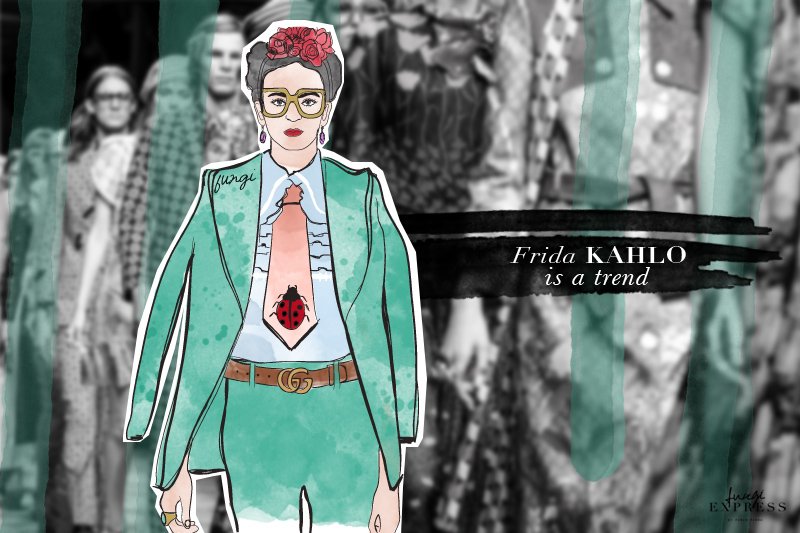
A más de 50 años de su muerte, la artista mexicana Frida Kahlo sigue siendo noticia y su cara aparece por doquier: decoración de restaurantes mexicanos, botellas de tequila, papelería, condones, papel de baño, camisetas, etc. La lista es infinita y podemos decir que efectivamente, Frida Kahlo está de moda... y es una auténtica mina de oro./ Frida Kahlo is still news, 50 years after her death. Her face appears everywhere: decoration in Mexican restaurants, tequila bottles, stationery, condoms, toilet paper, shirts, etc. The list is endless and we can say that indeed, Frida Kahlo is a hot trend right now... and also a real gold mine.
La semana pasada, la obra de Frida Kahlo, Dos desnudos en el bosque fue vendida en una subasta de arte en Nueva York por 8 millones de dólares, convirtiéndose en la obra de arte latinoamericana más costosa de la historia./ Last week, a painting by Frida kahlo, Two nudes in the forest was sold at an art auction in New York for $8 million dollars, becoming the most expensive artwork by a Latin American artist.

A partir de este suceso me puse a pensar en el negocio que representa Frida Kahlo, no sólo para la moda y el arte, sino para muchas otras industrias, pues la pintora se ha vuelto el icono de un país que casi se equipara con el tequila, el mariachi y los tacos... y sí, muchas veces cuando me presento como mexicano frente a europeos la primera cosa que me dicen es: "¡Wow, eres mexicano! Pues me encanta Frida Kahlo"./ Then I started to think about the business that Frida Kahlo represents, not only for fashion and art, but for many other industries, as the painter has become the icon of a country that almost equated with tequila, mariachis and tacos... and yes, many times when I present myself as a Mexican, the first thing people say is "Wow, you're Mexican! I just love Frida Kahlo".
El boom por Frida Kahlo en el extranjero comenzó mucho después de su muerte, algunos dicen que fue cuando un grupo feminista necesitaba un "ídolo", decidiéndose por la pintora como un símbolo de identificación en los 70, idea que fue evolucionando con el tiempo hasta convertirla en una especie de "mártir social" (similar al caso de Van Gogh) en donde las enfermedades y el dolor se convierten en una cosa romántica digna de admirar./ This obsession for Frida Kahlo began long after her death, some people say it was when a feminist group needed an "idol", so they took the image of the painter as an identification symbol back in the 70s, and idea that evolved over time to turn into a kind of "social martyr" (similar to the case of Van Gogh) where disease and pain become a worthy romantic thing to admire.

De icono de izquierda a marca registrada, Frida Kahlo sigue apareciendo por todos lados y me atrevo a decir que hemos llegado a ese punto donde su cara, su vestimenta y su historia dolorosa pesan más que cualquiera de sus pinturas. Y mientras la comercialización aumenta, la familia de Kahlo ha decidido poner en marcha -desde el 2007- la Frida Kahlo Co. con el objetivo de regularizar los productos con la imagen de la pintora./ From a right-wing icon to trademark, Frida Kahlo keeps popping up everywhere and I dare say that we have reached that point where her face, her clothes and her painful story outweigh any of her paintings. And while marketing increases, the Kahlo family has decided to launch -from 2007- the Frida Kahlo Co. with the aim of regularizing the products with the image of the painter.
Estoy consciente de que el arte migra a muchos otros terrenos y todo se repite con el tiempo bajo una nueva interpretación. El arte está ahí: en las portadas de revistas, en las pasarelas, en los objetos de diseño, en películas, etc. ¿Pero en qué momento la comercialización en los productos más hortera merece un límite? ¡Hasta el próximo post!/ I am aware that art migrates to many other fields and everything is repeated over time under a new interpretation. The art is there: on the covers of magazines, on runways, in objects of design, in films, etc. But at what point the most tacky products deserves a limit?