
Tenía ganas de volver a escribir en el blog pero suele pasar que a finales de año la vida se complica y a todo se le adhiere la etiqueta de URGENTE. Los rituales de año nuevo siempre se me hacen bola, porque después de las fiestas termino saturado, sin embargo siempre intento guardarme un ratito para la reflexión (sobre todo en Enero y Septiembre) anotando las futuras metas pero también celebrando las pequeñas victorias. Empezar a todo gas está bien, pero las posibilidades de dejar las cosas con hastío se incrementan, así que mejorar el 1% me pareció un buen recurso./ I wanted to write on the blog again, but usually every end of the year life gets complicated and everything is labeled as URGENT. New Year's rituals always come to my mind, because I tend to end up saturated after the holidays. However I always try to save a little moment for reflection (especially in January and September) writing down future goals but also celebrating small victories. Starting at full throttle is fine, but the chances of leaving things with ennui increase, so the 1% improvement rule seemed like a good resource to me.
USE THE 1% IMPROVEMENT RULE TO ACHIEVE 100%
Construir la vida que quieres es un proceso que no tiene como única fecha de arranque el 1 de enero. Tampoco hace falta que el proceso sea el más complicado porque son los hábitos simples los que pueden transformar tu estilo de vida un 1% cada día, hasta llegar al 100%. Parece insignificante, pero apostar por un cambio pequeñito pero constante muchas veces es mejor que las acciones grandes que desaparecen en un par de semanas porque abruman, no son sostenibles y no crean un hábito./ Building the life you want is a process that does not have January 1 as its only starting date. Nor does the process need to be the most complicated because it is simple habits that can transform your lifestyle by the 1% improvement rule, up to 100%. It seems insignificant, but betting on a small but constant change is often better than big actions that disappear in a couple of weeks because they can overwhelm us, are not sustainable and do not create a habit.
El concepto de los hábitos atómicos viene del famoso libro de James Clear. Es muy simple: mejorar un 1% cada día durante un período de tiempo largo en vez de optar por los cambios radicales. / The concept of atomic habits / the 1% improvement rule comes from the famous book by James Clear. It is super simple: improve 1% every day over a long period of time instead of going for radical changes.

Scheme via James Clear Twitter
¿Qué hacer? Dividir la meta en pequeñas acciones diarias. Cada acción de cada día es un 1% y la suma de todos esos días te irá acercando al 100% mientras te vas comprometiendo contigo mismx. E incluso cuando no tengas tantas ganas, el 1% es fácil de cumplir./ How does the 1% improvement rule works? Divide the goal into small daily actions. Each action of each day is 1% and the sum of all those days will get you closer to 100% as you commit to yourself. And even if you’re having a lazy or desmotivating day, the 1% is easy to stick to.
¿Algunas ideas para mejorar un 1% cada día?/ Any ideas to improve 1% every day?
1. Dejar de enfocarse en el objetivo y prestar más atención a como abordamos los métodos. Ejemplo: Hacer amigos es la meta, ir a reuniones o eventos cada semana es un método./ 1. Stop focusing on the goal and pay more attention to how we approach the methods. Example: Making friends is the goal, going to meetings or events every week is a method.
2. Construir un método que te permita permanecer en el juego durante más tiempo. Las metas son buenas para establecer una dirección, pero el método ayuda a progresar./ 2. Build a method that allows you to stay in the game longer. Goals are good for setting a direction, but the method helps progress.

3. Maestría en empezar cosas. La parte más difícil siempre es empezar por lo que puedes hacer la regla de los 2-3 minutos. No quiere decir que si tu objetivo es leer más, leas sólo por 2 ó 3 minutos, pero es un buen inicio y que se puede ir incrementando día a día según tus posibilidades./ 3. Mastery in starting things. The hardest part is always starting so you can do the 2-3 minute rule. It doesn’t mean you only have to read for 2-3 minutes if your gol is, for example, reading more. But hey, it is a good start and it can be increased day by day according to your possibilities.
La motivación antes de empezar casi nunca llegará, la mayoría de las veces dicha motivación llegará después de empezar. Es como la pereza de empezar la primera sentadilla, pero una vez que arrancas, ya estás en el juego./ Motivation before starting will -almost- never come, most of the time that motivation will come after starting. It's that laziness before starting the first squat, but once you’re there the game has begun and you’re body is on the track.
4. Rastrear los hábitos/ Algo tan simple como marcar con una X los días en los que cumples tu 1% y ver el progreso, ya que muchas veces lo que nos hace dejar las cosas es no ver un cambio notable. / 4. Track habits. Something as simple as marking the days in which you meet your 1% with an X to see the progress- Many times what makes us give things up is not seeing a noticeable change.
5. Encadenar acciones. Emparejar una acción que deseas realizar con una acción que si o si debes realizar. Si tu prioridad es salir a correr puedes organizarte para pasar a hacer la compra después del ejercicio. Si tu prioridad es leer más, puedes aprovechar el trayecto en el metro para leer unas cuantas páginas./ 5. Chain actions Pair an action you want to take with an action you should do. If your priority is to go for a run, you can organize your day to go shopping groceries after exercise. If your priority is to read more, you can take advantage of the subway ride to read a few pages.

Todo el mundo quiere una mejora radical, pero son las pequeñas decisiones del día a día las que nos han moldeado (en lo bueno y en lo malo)./ Everyone wants a radical improvement, but it's the small day-to-day decisions that have shaped us (for better and for worse).
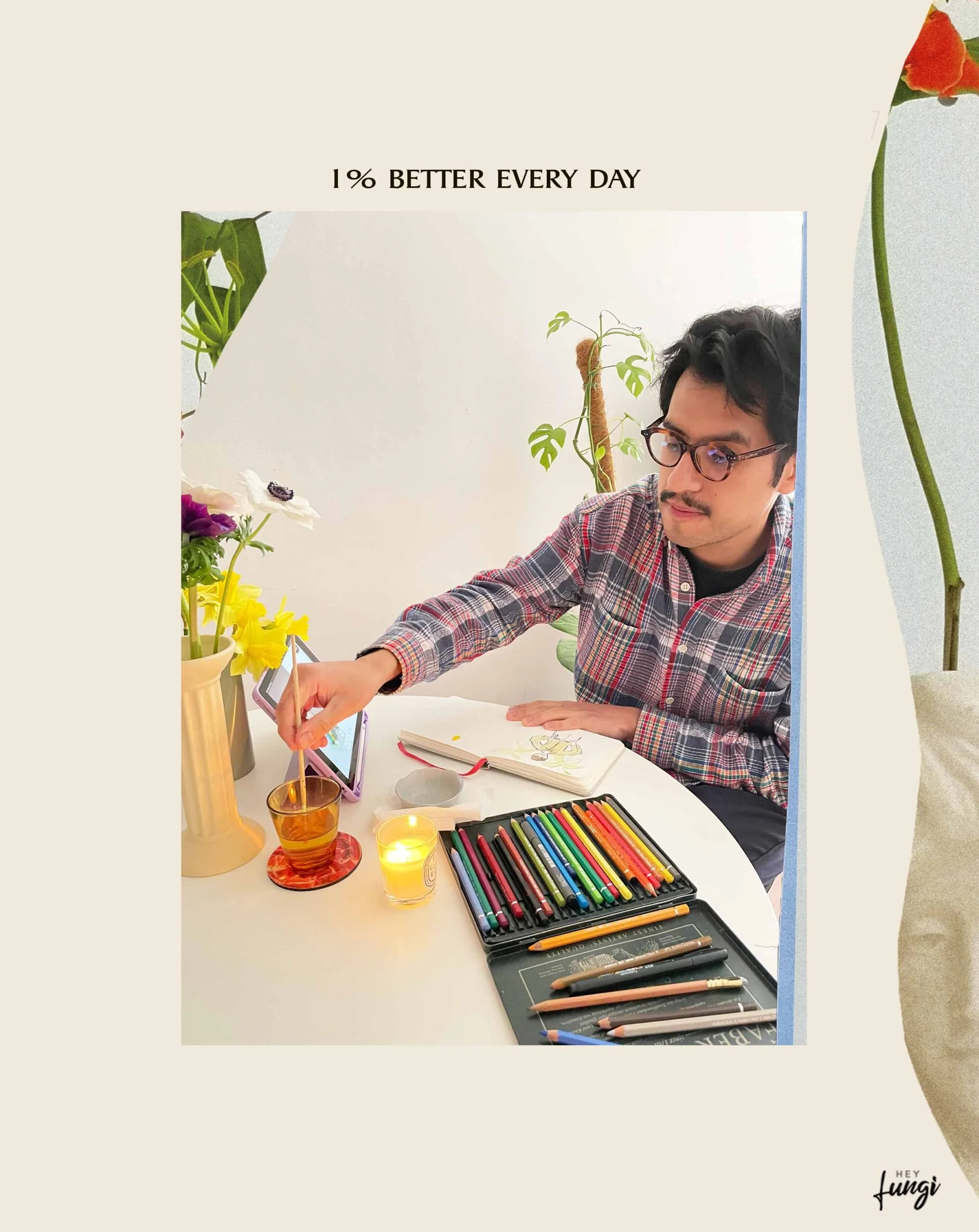
En mi caso personal, este es el año donde quiero regresar a las cosas que me hicieron empezar a diseñar/ilustrar: experimentar de nuevo con procesos y técnicas manuales, dibujar más sólo porque sí, etc. Sé que no siempre se podrá, pero reservar espacios para estos placeres, aunque sean momentos pequeñitos cada día me hace percibir mi trabajo y mi vida de otra manera./ In my personal case, this is the year where I want to return to the things that made me start designing/illustrating: experimenting again with manual processes and techniques, drawing more just for the sake of it, etc. Even reserving spaces for these pleasures, even if they are tiny moments each day, this can help me to perceive my work and my life in a different way.
También hay otras metas relacionadas con el deporte y lo profesional que he comenzado hace poco, despacio pero con pasos consistentes para no tirar la toalla en cuanto aparezca la menor frustración./ There are also other goals related to sports and the professional that I have recently started, slowly but with consistent steps to don't give up as soon as the slightest frustration appears.
La posibilidad de reinventarse aparece con el número 1 y la táctica de una mejora continua a base de esfuerzos pequeñitos parece ser mi apuesta este año. ¿La regla del 1% no suena tan difícil no?/ The possibility of reinventing yourself appears with number 1 and the tactic of continuous improvement based on small efforts seems to be my bet this year. The 1% improvement rule doesn't sound that hard, right?
